
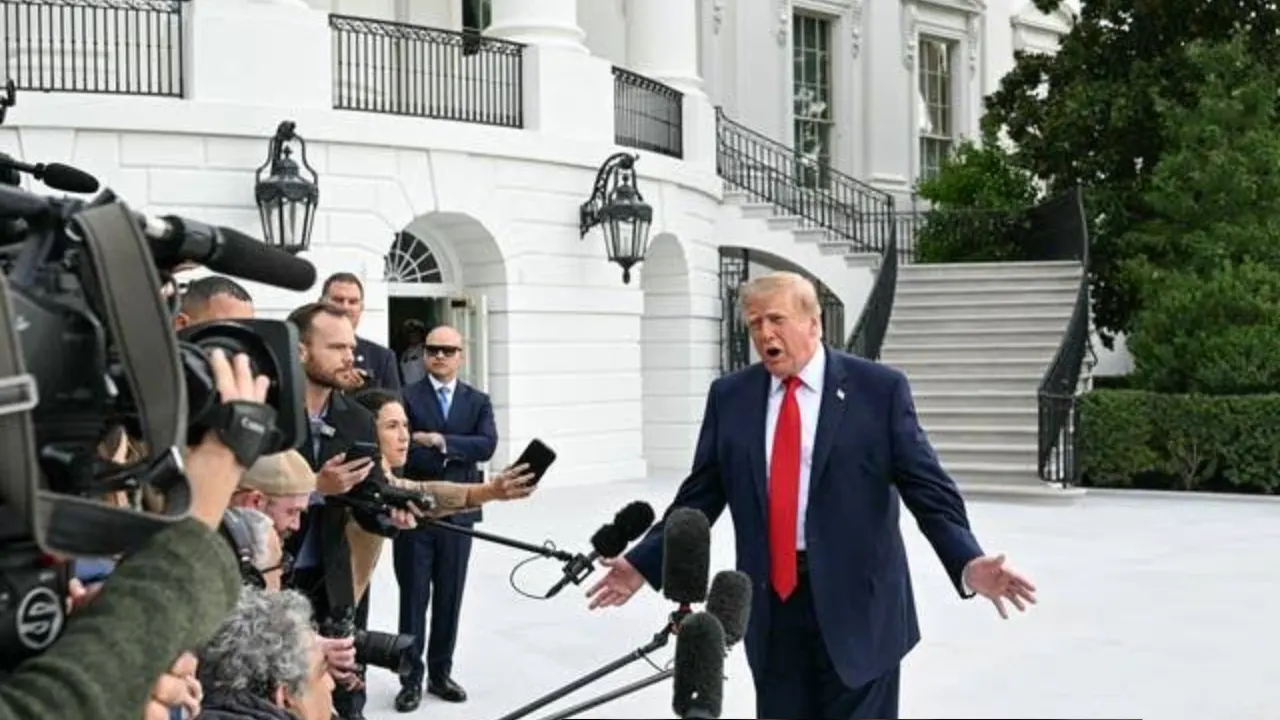
Donald Trump: White House Moves to Cut Nearly $1 Billion
President Donald Trump’s administration has announced plans to cancel nearly $1 billion in federal spending that Congress had previously approved. The move targets funding connected to immigrant services, diversity-focused programs, education initiatives and some health research. The White House says the cuts remove spending it views as wasteful or harmful, while critics argue the action bypasses Congress’s constitutional authority over federal money.
The announcement has quickly become more than a debate about individual grants. It has opened a larger argument about presidential power, Congress’s role in setting spending priorities and the use of a little-known budget tactic known as a pocket rescission.
The dispute is likely to draw close attention from lawmakers, advocacy groups and legal experts. It could also shape future fights over how much control a president has over money that Congress has already voted to spend.
What Did Donald Trump Announce?
The White House said it is using a pocket rescission to cancel nearly $1 billion in funding. The administration described the targeted spending as unnecessary and said the action is part of a broader effort to reduce programs it believes do not serve American taxpayers.
A large portion of the proposed cancellations involve services for immigrants, refugees, asylum seekers and unaccompanied minors. The White House argues that reduced border crossings have lowered the need for some of these programmes.
The announcement also identified funding connected to the Department of Education, Department of Health and Human Services, Department of Justice and other agencies. Some of the money was set aside for community programmes, health studies, international education, migrant education and minority business initiatives.
The White House’s language was unusually strong. It criticised several programmes as ideological, wasteful or disconnected from the administration’s priorities. It also highlighted grants given to organisations that work with immigrant communities and named former officials connected to previous Democratic administrations.
Supporters of the move see it as a direct effort to cut government spending and shift federal priorities. Critics see it as a major test of whether the executive branch can cancel appropriated money without Congress agreeing.
What Is a Pocket Rescission?
A pocket rescission is a budget tactic used near the end of a fiscal year.
Normally, if a president wants to cancel money approved by Congress, the president sends a rescission request to lawmakers. Congress then has the opportunity to vote on whether the cuts should happen.
A pocket rescission works differently. The administration asks for funding to be withheld so late in the fiscal year that Congress may not have time to act before the money expires.
In simple terms, the funds can run out before lawmakers get a realistic chance to approve or reject the cancellation.
The White House has argued that the Impoundment Control Act gives the president authority to use this process. That law lays out procedures for presidents who want to defer or rescind spending.
However, the Government Accountability Office and many budget experts have argued that pocket rescissions are not lawful because they undermine Congress’s power of the purse. The Constitution gives Congress the authority to decide how federal money is spent.
That legal disagreement is at the centre of the current controversy.
Why the Timing Matters
The timing of the White House announcement is one of the biggest issues raised by critics.
The administration announced the proposed cuts with only days remaining in the federal fiscal year. That gives Congress very little time to consider the rescission request, hold hearings or pass legislation in response.
Opponents say this is exactly why pocket rescissions are controversial. They argue the process turns what should be a shared decision into a unilateral decision by the executive branch.
The administration sees the situation differently. It says the money should not continue to flow to programmes it considers ineffective or misaligned with current policy. The White House has positioned the decision as a way to protect taxpayers and reduce spending that it believes has expanded too far.
The question now is whether a president can legally pause funding long enough for it to expire, even when Congress has already directed the government to use that money.
That issue goes beyond this particular package. A ruling or major political response could affect future presidents from both parties.
The Immigration and Refugee Services at the Centre of the Cuts
The largest share of the planned cancellations involves services for non-citizens.
The White House said hundreds of millions of dollars in Health and Human Services funding had been used for programmes that served refugees, asylum seekers and other immigrant populations. It argued that current border conditions mean the money is no longer needed at the same level.
Some of the groups named in the White House announcement provide services such as housing support, legal assistance, counselling, education, childcare and help for newly arrived families.
Supporters of the cuts argue that taxpayer money should be focused on citizens and that federal agencies should not fund programmes they believe encourage or support unlawful immigration.
Critics argue that many of these services involve people who are already in government custody, people seeking legal immigration protection or children who need care while their cases are processed.
The policy disagreement is significant because immigration is one of the most divisive issues in American politics. The funding fight is therefore not only about budgets. It is also about how the federal government should treat people arriving in the United States and the organisations that support them.
Education, Health and Diversity Programmes Also Face Cuts
The announced cuts go beyond immigration-related funding.
The White House has proposed reductions to education programmes for migrant students, international education grants and research initiatives connected to health equity, diversity and gender-related care.
It also targeted funds connected to the Justice Department’s Community Relations Service, an office created to help communities address racial and ethnic tensions.
The administration says some programmes have moved away from their original mission or support political and ideological goals that it opposes. It argues that federal money should not go to projects it sees as promoting race-based preferences, diversity policies or gender ideology.
Critics strongly disagree with that characterisation. They argue that many of the programmes are designed to address real gaps in health care, education and community support.
The debate highlights a major change in federal policy under Trump. His administration has made cutting diversity, equity and inclusion initiatives a central part of its governing agenda. Supporters see that as a move toward equal treatment and fiscal restraint. Opponents see it as an attempt to eliminate programmes designed to help historically underserved groups.
Susan Collins Pushes Back
Senator Susan Collins of Maine, a Republican and chair of the Senate Appropriations Committee, was among the most prominent lawmakers to criticise the move.
Collins said the administration acted without warning or consultation and argued that the Office of Management and Budget does not have the authority to decide on its own which congressionally approved programmes should receive money.
Her opposition matters because it shows that the concerns are not limited to Democrats.
In budget fights, lawmakers from both parties often defend Congress’s spending power. Even when they support a president’s policy goals, they may oppose a process that reduces Congress’s role in deciding how money is used.
Collins has repeatedly raised concerns about attempts to withhold appropriated funds. Her criticism reflects a long-standing belief among many senators that the executive branch cannot simply ignore spending laws passed by Congress.
The issue may become particularly important as lawmakers negotiate future spending bills. If members of Congress believe their decisions can be overturned later through administrative action, it could make budget negotiations even more difficult.
Democrats Call the Action Unlawful
Democratic lawmakers have been even more forceful in their response.
Senator Patty Murray of Washington, the senior Democrat on the Senate Appropriations Committee, called the move a direct challenge to Congress’s authority. She argued that the money was approved through bipartisan legislation and should be used as Congress intended.
Democrats say the pocket rescission approach is an unlawful attempt to take spending power away from elected lawmakers. They argue that the president can recommend cuts, but cannot permanently block funding without Congress passing a new law.
The administration is likely to respond that it is using legal tools available under the Impoundment Control Act and that the government has a responsibility to prevent waste.
This is where the disagreement becomes legal as well as political. One side sees a president acting to control spending. The other sees a president refusing to carry out laws passed by Congress.
The Role of the Government Accountability Office
The Government Accountability Office, often called the GAO, plays an important role in these disputes.
The GAO is an independent agency that reviews how federal money is used and whether government actions comply with budget law. It has previously stated that pocket rescissions are inconsistent with the Impoundment Control Act.
The agency’s view is that a president cannot use the calendar to achieve what Congress has not approved. In other words, if lawmakers do not vote to cancel the funds, the executive branch cannot simply wait until the money expires.
The GAO’s opinions do not always end a political fight. The White House may disagree, and court cases may be needed to settle the matter.
Still, the GAO’s position gives opponents of the cuts an important argument. It means the administration’s action is likely to face serious legal scrutiny.
A Broader Fight Over Presidential Power
The spending cancellation dispute fits into a larger debate about the limits of executive power.
Trump has argued that presidents need more authority to act quickly, reduce waste and carry out the policies voters elected them to pursue. His administration has used executive action on immigration, tariffs, federal staffing and other major issues.
Critics say these actions can weaken the balance between the three branches of government. They argue that Congress writes the laws, controls spending and must remain a real check on presidential power.
The courts may become the final referee. If lawsuits are filed, judges will need to decide whether the administration’s interpretation of the law is valid.
The Supreme Court could eventually become involved, especially if lower courts issue conflicting rulings.
That possibility makes the current dispute important even for people who do not follow every budget decision. The outcome could affect how future administrations handle money approved by Congress.
What Happens Next?
Several things could happen next.
Congress could try to pass legislation that blocks or reverses the cuts. Lawmakers could also demand more information from the Office of Management and Budget through hearings and oversight requests.
Advocacy groups or states affected by the cuts could file lawsuits. Organisations that rely on federal grants may also challenge the action if they believe contracts or legal obligations have been violated.
The White House is likely to defend the decision by arguing that the cuts are necessary and lawful. It may also point to previous efforts to reduce federal spending and remove programmes it believes are outdated.
For now, the action has created a sharp divide. Trump’s supporters see a president willing to take on wasteful spending. His critics see a challenge to Congress’s constitutional role.
The fight over nearly $1 billion in funding may look technical at first, but the bigger question is simple: who gets the final say over federal money, the president or Congress?