
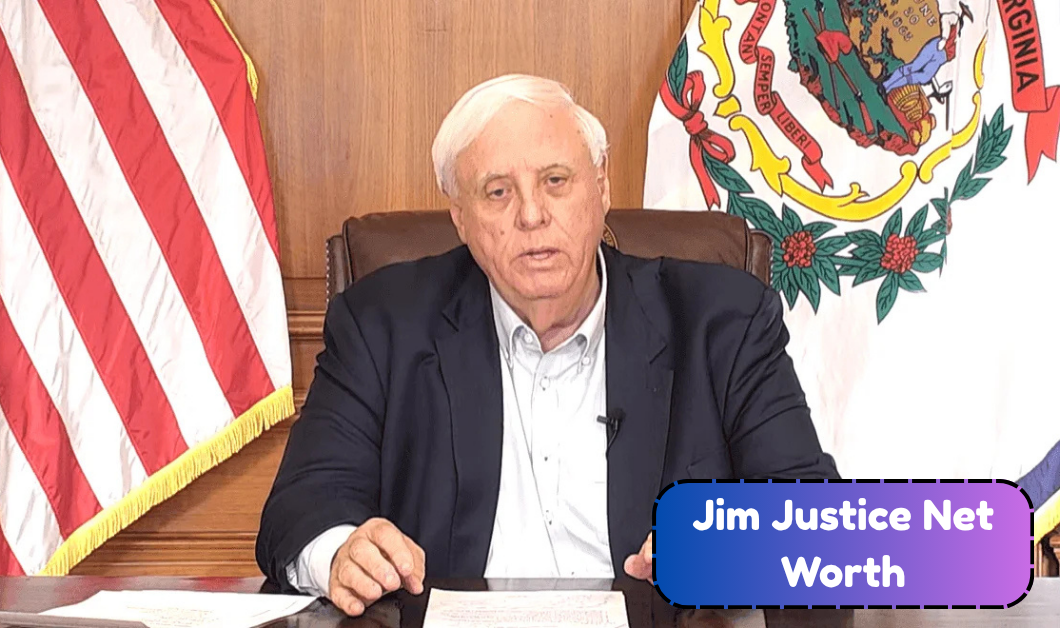
Jim Justice Net Worth: How His Coal, Agriculture and Greenbrier Businesses Built His Wealth
Jim Justice is an American businessman and Republican politician whose career has moved from coal and agriculture into hospitality and public office. The West Virginia native built a large family business operation before serving two terms as governor and later entering the U.S. Senate.
The net-worth figure supplied for this article estimates Jim Justice’s net worth at $700 million, while also stating that his wealth once reached as high as $1.7 billion. These figures are estimates rather than a simple cash balance. Justice’s assets are connected to private businesses, land, agriculture, coal, real estate and hospitality, while his companies have also faced financial obligations and legal disputes.
Justice’s official Senate biography confirms that he returned to his family’s business, eventually becoming president and CEO of Bluestone Industries and Bluestone Coal Corporation. It also notes that the business expanded beyond coal into a wider portfolio.
Jim Justice Net Worth
The supplied estimate places Jim Justice’s net worth at about $700 million in 2026.
It is important to understand that estimates of a private business owner’s wealth can change considerably. Justice’s holdings are not simply shares in publicly traded companies that can be valued by checking a stock price. His financial interests have included private companies, agricultural land, coal operations, real estate and hospitality properties.
Members of the U.S. Senate are also required to file financial disclosure reports. The Senate maintains a public financial disclosure system for senators and other covered officials, providing a formal source for reviewing reported assets and financial interests.
That makes Justice’s finances somewhat different from those of a politician whose wealth comes mainly from a government salary.
Early Life and Education
James Conley Justice II was born on April 27, 1951, in Charleston, West Virginia. He grew up in Raleigh County and attended Woodrow Wilson High School in Beckley.
Justice came from a business family. His father, James C. Justice Sr., was involved in coal and agriculture, and those industries eventually became the foundation of the family’s business interests.
Justice later attended Greenbrier Military Academy and the University of Tennessee before transferring to Marshall University.
At Marshall, he played golf and became captain of the university’s golf team. He earned both a bachelor’s degree and an MBA from Marshall.
His Senate biography also highlights his background as a golfer and his long involvement in coaching and youth sports.
Jim Justice’s Business Career
After completing his education, Justice returned to the family business.
Over time, he became president and CEO of Bluestone Industries and Bluestone Coal Corporation. The family business eventually expanded into a much broader collection of companies and interests.
Coal remained a major part of Justice’s business career, but agriculture became another important area.
His business interests have included farming, timber and other agricultural operations, alongside land and real estate holdings.
Justice’s official biography describes the family enterprise as expanding well beyond coal into areas that included manufacturing and championship golf courses.
This diversification is an important part of understanding how Justice accumulated wealth over several decades.
The Greenbrier
One of Justice’s most recognizable business assets is The Greenbrier, the historic luxury resort in White Sulphur Springs, West Virginia.
Justice purchased the resort in 2009 after it went through bankruptcy proceedings. The property has a long history in West Virginia and has hosted presidents, celebrities and other prominent visitors.
The resort also became closely connected to Justice’s public image. He promoted The Greenbrier as a destination and as an important part of West Virginia’s tourism industry.
The property is also known for its Cold War-era underground bunker, which was designed as a potential emergency facility for members of Congress.
Justice’s purchase of The Greenbrier was one of the most visible steps in his business career. It connected his interests in hospitality, real estate, tourism and West Virginia’s broader economy.
At the same time, the resort and other Justice-related businesses have been involved in financial disputes and litigation. Those issues are relevant when trying to understand why estimates of his net worth can vary.
Agriculture and Coal
Coal and agriculture have both played significant roles in the Justice family business.
Justice’s agricultural interests have included farmland and farming operations. His Senate biography also notes that he became an eight-time national corn-growing champion, reflecting his longstanding involvement in agriculture.
The coal business, meanwhile, was inherited from the family operation and became a major part of Justice’s professional identity.
Justice has continued to discuss energy production during his political career. As a senator, he serves on the Senate Energy and Natural Resources Committee, among other committees.
Jim Justice Enters Politics
Justice entered electoral politics after decades in business.
He ran for governor of West Virginia in 2016 and won the election as a Democrat. He took office in January 2017.
In August 2017, Justice announced that he was switching to the Republican Party. He later won reelection as governor in 2020 as a Republican. His official Senate biography confirms that he served two terms as governor from 2017 through 2025.
His political career brought his business background into a much more public setting.
As governor, Justice frequently spoke about energy, economic development, infrastructure, tourism and taxation. His administration also dealt with the COVID-19 pandemic and other state issues.
Jim Justice Becomes a U.S. Senator
Justice ran for the U.S. Senate in 2024 for the seat previously held by Joe Manchin.
He won the election and became a U.S. senator from West Virginia in January 2025. The Senate Historical Office lists Justice as a Republican senator beginning January 14, 2025.
His official Senate biography lists committee assignments including Energy and Natural Resources, Agriculture, Nutrition and Forestry, Small Business and Entrepreneurship, and Aging.
His transition from businessman to governor and then senator has made his financial background an important part of his public biography.
Business Debts and Financial Disputes
Justice’s wealth cannot be understood only by looking at the estimated value of his assets.
His companies have faced lawsuits, debt disputes, tax-related issues and other financial claims over the years. Those matters have led to questions about the difference between the gross value of his business holdings and his net wealth after liabilities.
This is one reason private estimates of Justice’s fortune can differ.
A business owner can hold valuable land, companies and properties while also carrying substantial debt. The value of those assets can also change depending on market conditions, company performance and outstanding obligations.
For that reason, the $700 million figure should be treated as an estimate, rather than an independently verified amount of cash or immediately available wealth.
Jim Justice’s Family
Justice is married to Cathy Justice, whom he met while attending Woodrow Wilson High School.
The couple have two adult children, Jay and Jill, and four grandchildren. Justice’s official Senate biography describes his family and notes that both he and Cathy remain closely connected to West Virginia.
His children have also been associated with aspects of the family business.
Justice’s personal interests include sports and coaching. He has coached basketball and has remained involved in athletics in West Virginia for decades. His English bulldog, Babydog, also became a recognizable part of his public image during his time as governor and beyond.
Jim Justice’s Wealth and Career Today
Jim Justice’s financial story is closely connected to the industries that shaped his life in West Virginia.
Coal provided an early foundation for the family business, while agriculture, land, hospitality and other ventures expanded the business portfolio. The purchase of The Greenbrier became one of the most visible investments associated with his name.
His career later moved into public office, first as governor and then as a U.S. senator.
The supplied estimate of $700 million gives an indication of the scale of Justice’s reported wealth, but the exact value of a private business empire is difficult to establish. His financial picture includes valuable assets as well as debts, obligations and business disputes.
Today, Justice continues to serve in the U.S. Senate while remaining closely associated with the family businesses and West Virginia institutions that shaped his career. His path from a family business in Raleigh County to the governor’s office and eventually the Senate is a central part of his public biography.