
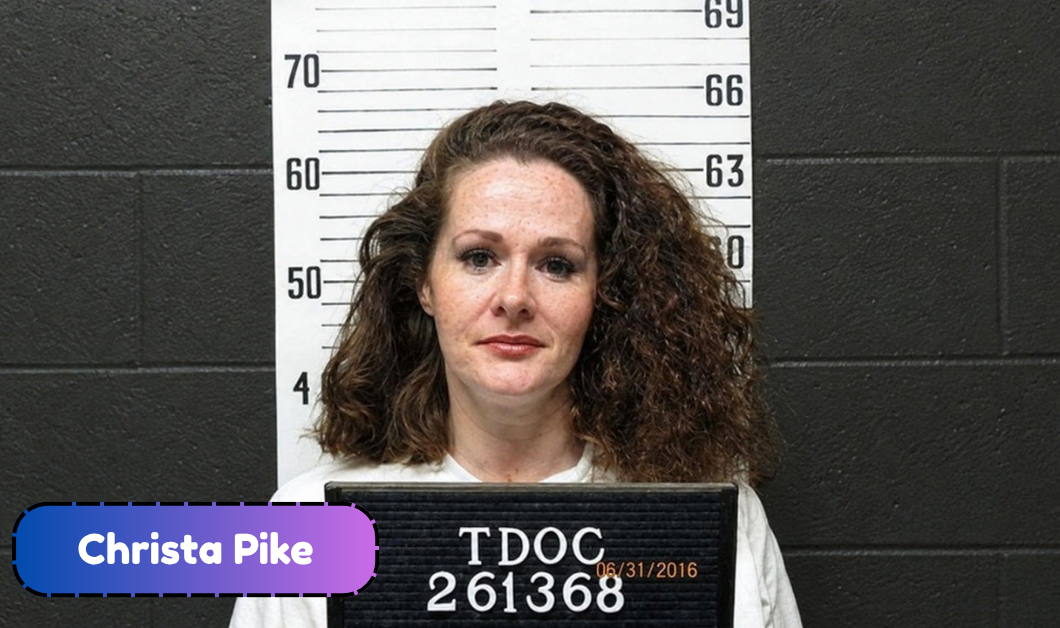
Christa Pike Execution: What Happened to the Other Two Teens in the Colleen Slemmer Case?
Christa Pike is once again at the center of national attention as Tennessee prepares to execute her for the 1995 murder of Colleen Slemmer. Pike was 18 years old when the crime happened and later became one of the youngest women sentenced to death in the United States.
But Pike was not alone on the night Slemmer was killed.
Two other teenagers, Tadaryl Shipp and Shadolla Peterson, were connected to the crime. Their cases took very different paths from Pike’s, leaving one serving a life sentence while the other returned to life outside prison years ago.
Pike, now 50, is scheduled to die by lethal injection on September 30, 2026. If the execution goes forward, she will become the first woman executed in Tennessee in more than two centuries.
The approaching execution has renewed questions about the 1995 case, the role of Pike’s accomplices and where they are today.
What Happened to Colleen Slemmer?
Colleen Slemmer was a 19-year-old student attending the Knoxville Job Corps program in Tennessee.
Pike, Tadaryl Shipp and Shadolla Peterson were also connected to the Job Corps program.
On January 12, 1995, the group persuaded Slemmer to leave the center with them, reportedly using the promise of smoking marijuana as a reason to get her away from the campus.
They eventually reached a secluded area on the University of Tennessee Agricultural campus.
Prosecutors said Pike believed Slemmer was interested in her boyfriend, Shipp, and that jealousy became the motive behind the confrontation.
What followed became the basis of one of Tennessee’s most notorious murder cases.
Slemmer was beaten and attacked for an extended period. Court records described multiple injuries and said Pike carved a pentagram into Slemmer’s chest.
She was ultimately killed by severe blows to the head.
Investigators also said Pike took a piece of Slemmer’s skull from the scene and later showed it to other people.
Slemmer’s body was discovered the following morning.
Pike was arrested soon afterward and eventually convicted of first-degree murder.
Who Is Tadaryl Shipp?
Tadaryl Shipp was Pike’s boyfriend at the time of the killing.
He was 17 years old when Colleen Slemmer was murdered.
Because Shipp was a juvenile at the time of the crime, his legal situation was different from Pike’s.
He was prosecuted in connection with Slemmer’s death but could not receive the same death sentence that Pike received.
Shipp was eventually sentenced to life in prison with the possibility of parole.
Evidence and testimony presented over the years placed Shipp at the scene during the attack.
The case also drew attention to Pike and Shipp’s interest in occult imagery. Reports from the period described the pair wearing pentagram necklaces and using nicknames connected to satanic themes.
However, investigators and prosecutors also focused heavily on jealousy and the relationship involving Pike, Shipp and Slemmer as the motive behind the crime.
That distinction matters because the case emerged during an era when claims involving Satanism often generated intense public attention.
Shipp’s role, however, was established through the criminal case rather than simply through those images or nicknames.
Where Is Tadaryl Shipp Now?
Unlike Pike, Tadaryl Shipp remains alive and incarcerated.
He received a life sentence that included the possibility of parole.
According to the details provided, Shipp eventually became eligible to seek release and had a parole request considered in 2025.
That attempt was denied.
He remains in Tennessee’s correctional system and is reported to be held at the Northwest Correctional Complex.
Shipp could have additional opportunities to seek parole in the future depending on Tennessee’s rules and decisions by the parole board.
His sentence has long been compared with Pike’s because they were both teenagers when the murder occurred.
The critical legal difference was Shipp’s age.
He was 17, while Pike was 18.
That distinction ultimately helped place the two on dramatically different sentencing paths.
Decades later, Shipp remains imprisoned while Pike faces execution.
Who Is Shadolla Peterson?
Shadolla Peterson was the third young person connected to Slemmer’s death.
She was 18 at the time.
Peterson knew Pike and Shipp through the Job Corps program and went with them on the night Slemmer was killed.
Her legal outcome was very different from both of theirs.
Peterson eventually pleaded guilty to being an accessory after the fact rather than being convicted of murder.
Prosecutors reportedly concluded that they did not have enough evidence to successfully pursue a murder conviction against her.
Peterson also cooperated with authorities and testified against Pike and Shipp.
Her role became a disputed part of the case.
Shipp reportedly told investigators that Peterson had participated in some of the violence.
However, prosecutors did not ultimately charge and convict her in the same way they did Pike and Shipp.
Peterson received credit for time she had already spent in custody and was sentenced to probation.
That allowed her to leave jail while Pike and Shipp faced far more severe punishment.
Where Is Shadolla Peterson Now?
Very little is publicly known about Shadolla Peterson’s current life.
After completing the legal consequences of her accessory conviction, she largely disappeared from public view.
Unlike Pike, who remained on death row and became the subject of years of appeals, and Shipp, who remained incarcerated, Peterson was able to return to life outside prison.
She has not maintained a notable public profile.
There is no reliable information in the details provided identifying her current occupation, residence or family circumstances.
That lack of information means claims about where she currently lives should be treated cautiously.
Her name tends to reappear mainly when Pike’s case returns to the news.
The approaching execution has once again placed attention on the different outcomes received by the three people connected to the crime.
Why Was Christa Pike Sentenced to Death?
Pike was convicted of first-degree murder in 1996.
The prosecution presented evidence describing her as the central figure in the attack and highlighted the prolonged nature of the killing.
A jury sentenced her to death.
Her case has remained in the courts for decades through numerous appeals and challenges to her sentence.
As her September 2026 execution date approached, her lawyers made another effort to obtain clemency.
Her defense team has argued that Pike’s life and mental health need to be considered when evaluating her sentence.
Her attorneys have pointed to a history of severe childhood abuse and later diagnoses that they say include bipolar disorder and post-traumatic stress disorder.
They have also argued that understanding of adolescent brain development has changed considerably since Pike was sentenced in the 1990s.
Her lawyers maintain that the woman facing execution at age 50 is very different from the 18-year-old who committed the crime.
Those arguments have been presented as reasons to commute her death sentence rather than erase her conviction.
Slemmer’s family, meanwhile, has lived with the consequences of the murder for more than three decades.
The competing arguments surrounding punishment have become a major part of the final legal debate.
Pike Faces Execution While Shipp Remains in Prison
The three teenagers connected with Colleen Slemmer’s killing ended up receiving dramatically different sentences.
Christa Pike was convicted of first-degree murder and sentenced to death.
Tadaryl Shipp was also held responsible for his involvement but received a life sentence because he was a juvenile when the crime occurred.
Shadolla Peterson pleaded guilty to being an accessory after the fact, cooperated with prosecutors and eventually returned to life outside prison.
More than 30 years later, those differences remain striking.
Shipp is still incarcerated and may have future opportunities to seek parole.
Peterson’s present whereabouts remain largely private.
Pike is scheduled for lethal injection on September 30, 2026.
If no court or other authority intervenes, her execution will become a historic event in Tennessee, where no woman has been executed in more than 200 years.
The case continues to attract attention not only because of the approaching execution but also because three young people connected with one murder ultimately faced very different legal outcomes.
For Colleen Slemmer’s family, however, the case is not simply a story about death row, parole or legal history.
At its center remains the loss of a 19-year-old woman whose killing has shaped the lives of everyone connected with the case for more than three decades.