
Caleb Flynn Convicted: What Happened to His Wife Ashley Flynn and What Comes Next
Caleb Flynn, a former Ohio music pastor who once appeared as a contestant on American Idol, has been convicted of murdering his wife, Ashley Flynn, after prosecutors argued that he staged their home to make her killing look like a burglary.
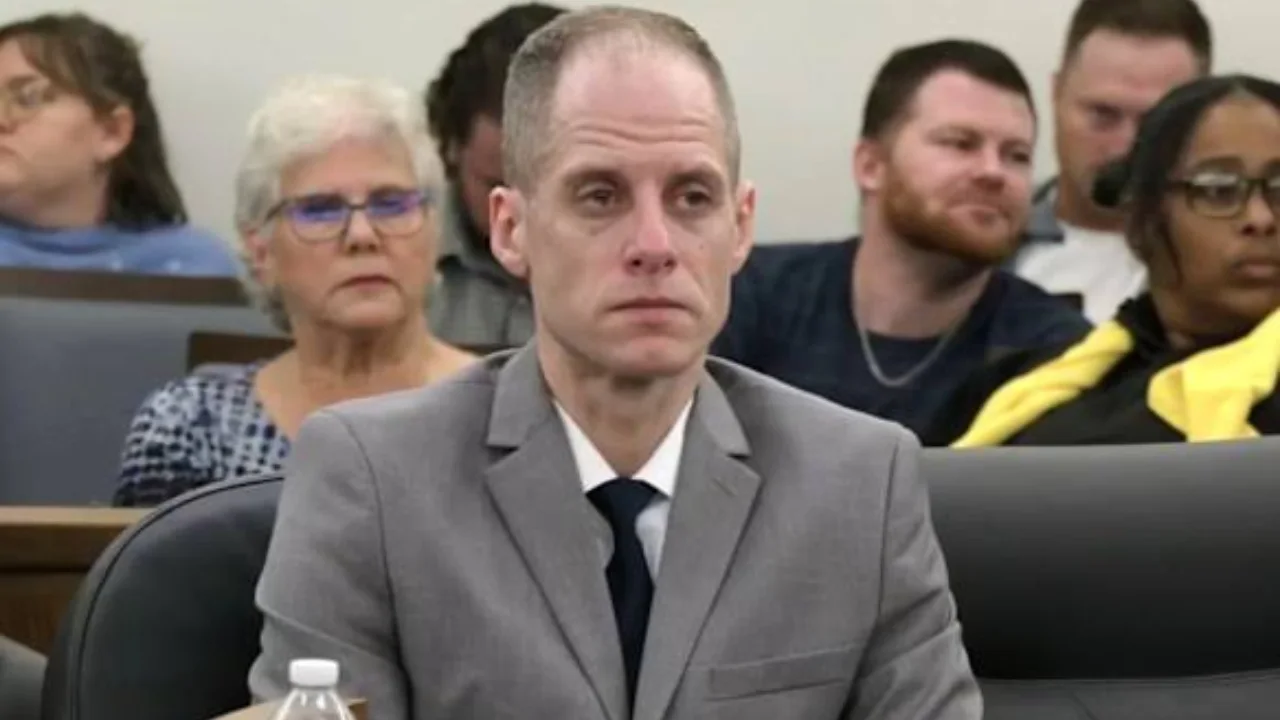
Flynn, 40, became emotional as the guilty verdict was read on Tuesday. He cried, shook his head and at times closed his eyes while listening to the decision. The conviction followed a closely watched trial centered on electronic evidence, an extramarital relationship and messages prosecutors said revealed Flynn had repeatedly thought about his wife’s death.
Ashley Flynn, a 37-year-old teacher and volleyball coach, was found dead inside the couple’s home in February. She had suffered two gunshot wounds to the head. Caleb initially told investigators that his wife had been killed during a burglary, but prosecutors presented a very different version of what happened.
Flynn now faces the possibility of spending the rest of his life in prison. His sentencing is scheduled for October 5, while his defense has indicated that an appeal is expected.
Who Is Caleb Flynn?
Caleb Flynn is a former music pastor from Ohio who also had a brief connection to American Idol.
Long before his name became associated with a murder investigation, Flynn appeared during the 12th season of the singing competition. During his appearance, he spoke warmly about Ashley and indicated that she had encouraged him to audition.
That old television appearance gained new attention after Ashley’s death and Flynn’s subsequent arrest.
His American Idol background, however, was only a small part of the murder trial. The case focused largely on what happened inside the Flynn home, the couple’s marriage, Flynn’s relationship with another woman and the digital trail prosecutors said contradicted his explanation of the killing.
Ashley and Caleb were also parents to two daughters. The children were at the family home when authorities arrived following their mother’s death, adding another deeply painful dimension to the case.
What Happened to Ashley Flynn?
Ashley Flynn was found dead at the couple’s home in February.
She had been shot twice in the head.
Caleb told police that he believed his wife had been killed during a burglary. His version presented him as someone who had been asleep while an unknown intruder entered the home and killed Ashley.
Investigators, however, began questioning whether the scene matched that account.
Prosecutors ultimately alleged that there had been no genuine home invasion at all. According to the state’s case, Caleb manipulated parts of the scene in an effort to support the burglary story and distance himself from Ashley’s killing.
That alleged staging became an important part of the prosecution’s theory.
Rather than treating Ashley’s death as a random crime committed by an outsider, authorities built a case against her husband.
Electronic Evidence Became Important at Trial
One of the central issues involved Caleb Flynn’s claim that he was sleeping when Ashley was murdered.
Prosecutors introduced electronic evidence that they said showed movement associated with his devices during the relevant period.
That evidence was used to challenge the idea that Flynn had simply slept through the killing.
Digital information has become increasingly important in criminal investigations because phones, smart devices and other electronics can create records of activity even when there are no eyewitnesses.
In Flynn’s case, prosecutors relied on the electronic evidence as part of a larger circumstantial picture.
The defense, meanwhile, emphasized that the state did not have certain pieces of direct physical evidence, most notably a recovered murder weapon.
That distinction became one of the major points of disagreement between the two sides.
Prosecutors Focused on Flynn’s Affair
Another major part of the state’s case involved Caleb Flynn’s relationship with Alleigha Botner.
Botner testified about what prosecutors described as a years-long affair with Flynn.
Her testimony went beyond simply establishing that Flynn had been unfaithful. She told the court that he had spoken repeatedly about wanting Ashley gone.
According to Botner’s testimony, Flynn’s comments became more disturbing over time.
She described statements that allegedly progressed from wishing Ashley were dead to discussing the possibility of killing her without going to prison.
Botner also testified that Flynn once told her he had stayed awake thinking about ways he could kill his wife.
Those statements became important because prosecutors were attempting to establish motive and intent, not merely prove that Flynn had another relationship.
The defense disputed the meaning that should be attached to those conversations.
A Text Sent Before Ashley’s Death Drew Attention
Perhaps one of the most striking pieces of evidence discussed during the trial was a message Flynn allegedly sent Botner the night before Ashley died.
The message read: “I choose you. I’m free. Actions will come tomorrow, February 16, a day I’ll never forget.”
Prosecutors presented the timing and wording of the message as significant to their case.
Taken alongside Botner’s testimony about previous conversations concerning Ashley’s death, the state argued that the communication helped establish Flynn’s intentions.
The defense challenged the prosecution’s interpretation of the relationship and messages.
Defense attorneys argued that some of Flynn’s negative statements about Ashley could have been made to satisfy or reassure Botner during the affair rather than represent a genuine plan to commit murder.
It was an important distinction for jurors to consider because disturbing words alone do not automatically establish who committed a killing.
The jury ultimately returned a guilty verdict after hearing the broader collection of evidence.
Defense Attorneys Questioned the Physical Evidence
Flynn’s defense team concentrated heavily on what prosecutors could not physically produce.
One major point was the absence of the murder weapon.
Attorney Patrick Mulligan argued that being unfaithful did not make Flynn a murderer.
That argument reflected the defense’s broader strategy. Rather than trying to portray Flynn’s marriage or affair positively, his attorneys sought to separate evidence of marital problems and infidelity from proof that he personally shot Ashley.
They questioned whether the prosecution could establish beyond a reasonable doubt that Flynn was the gunman without stronger direct physical evidence.
The prosecution’s case instead relied on different pieces of evidence that, when considered together, were presented as pointing toward Flynn.
These included the allegedly staged crime scene, electronic activity, his affair, testimony concerning earlier statements about killing Ashley and the message sent shortly before her death.
After considering the competing arguments, the jury found Flynn guilty.
Caleb Flynn Reacted Emotionally to the Verdict
Flynn’s reaction inside the courtroom reflected the seriousness of the moment.
As the judge announced the guilty decision, he cried and shook his head. At certain points, he closed his eyes while the verdict was being delivered.
For Ashley’s family and those who knew her, the verdict marked a major development after months of investigation and court proceedings.
For Flynn, it means he now faces a potentially life-changing prison sentence.
The case is not necessarily finished from a legal standpoint, however.
Mulligan indicated outside the courthouse that the defense was disappointed with the outcome despite respecting the judicial process.
He also said he fully expected a notice of appeal to be filed.
An appeal would not amount to another jury trial from the beginning. Instead, an appellate court would generally examine claims of legal error arising from the proceedings.
Who Was Ashley Flynn?
Ashley Flynn was 37 years old when she died.
She worked as a teacher and volleyball coach, roles that placed her within both education and athletics in her community.
Her death also left the couple’s two daughters without their mother.
Although much of the public attention surrounding the case has naturally centered on Caleb, the affair and his American Idol history, Ashley’s life extended well beyond the circumstances of her death.
She was a mother, educator and coach.
The case became especially disturbing because the killing happened inside the family home, a place prosecutors alleged was later manipulated to create the appearance of an outside intruder.
Caleb Flynn’s American Idol Appearance Resurfaced
Flynn’s connection to American Idol became one of the unusual details surrounding the case.
He appeared briefly during season 12 of the popular singing competition.
During that appearance, Flynn discussed Ashley in affectionate terms and credited her with encouraging him to audition.
Years later, those comments took on a very different context as footage from his television appearance resurfaced during coverage of the murder case.
Still, Flynn was not primarily known as a major American Idol personality. His appearance was relatively brief, and his connection with the program became widely discussed again because of the criminal proceedings.
His work as a music pastor similarly became part of the background used to explain who he was before Ashley’s killing.
Neither his religious work nor reality television appearance was proof related to the murder itself.
The prosecution’s case centered instead on the evidence surrounding Ashley’s death and Flynn’s conduct before and afterward.
Why the Alleged Burglary Story Mattered
Flynn’s original account of a deadly burglary was crucial because it offered an explanation involving an unknown third party.
If an intruder had entered the home, killed Ashley and left, Flynn’s presence in the house would not itself prove involvement.
Prosecutors therefore needed to challenge that narrative.
They argued that the supposed home invasion had been fabricated and that Flynn altered the crime scene to make the burglary explanation appear believable.
This allegation allowed the state to argue not only that the burglary had not happened as Flynn claimed, but also that attempts had been made to misdirect investigators.
The jury’s guilty verdict shows that prosecutors persuaded jurors of Flynn’s guilt beyond a reasonable doubt under the applicable legal standard.
What Happens to Caleb Flynn Next?
Flynn is scheduled to be sentenced on October 5.
He faces up to life in prison following his murder conviction.
The exact sentence will be determined through the sentencing process, so the guilty verdict itself does not establish precisely how long he will ultimately remain incarcerated.
There is also the expected appeal.
Flynn’s attorney publicly indicated after the verdict that a notice of appeal was anticipated. That means further legal proceedings could follow even after sentencing.
For now, however, the most significant development is clear. A jury rejected the defense’s attempt to create reasonable doubt and convicted Caleb Flynn of murdering his wife.
The case began with what Flynn described as a deadly burglary inside his own home. It eventually developed into a prosecution built around digital activity, an alleged staged crime scene, an extramarital affair, disturbing conversations and a message sent shortly before Ashley’s death.
Flynn’s old American Idol appearance may have brought extra public attention to the trial, but it was the evidence concerning his marriage and the events surrounding Ashley’s killing that shaped the courtroom battle.
With the verdict now delivered, attention turns to his October 5 sentencing and the expected appeal. For Ashley Flynn’s family and community, the case also remains the story of a 37-year-old teacher, coach and mother whose life ended violently inside her home.