
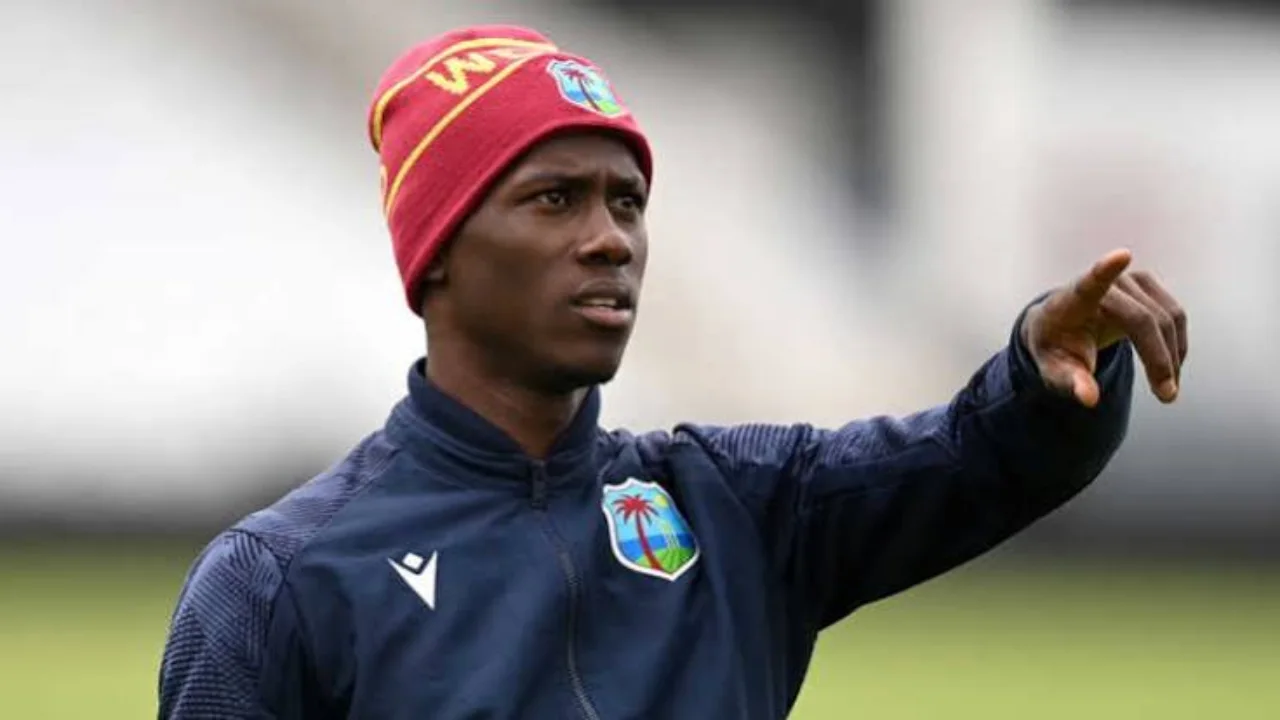
Shamar Joseph Injury Update: West Indies Pacer Sidelined by Shoulder Problem
Shamar Joseph’s return to international cricket has been delayed again after the West Indies fast bowler experienced discomfort in his shoulder while preparing for the limited-overs series against Bangladesh.
The 26-year-old quick had been included in the West Indies squads for the ODI and T20I portions of the Bangladesh tour, giving him an opportunity to return after missing the Test series against India. Instead, another physical problem has interrupted his comeback and raised fresh questions over when he will be able to bowl competitively again.
Joseph was with the ODI squad in Dhaka when the shoulder problem became a concern. Cricket West Indies subsequently confirmed that he would not take part in the three-match ODI series and recommended that he consult a specialist in England before beginning the next stage of rehabilitation.
It is a frustrating development for a bowler who quickly became one of the most exciting names in West Indies cricket after his remarkable introduction to Test cricket. Joseph’s pace, aggression and ability to create wickets gave the Caribbean side something it had been searching for, but injuries have made it difficult for him to build uninterrupted momentum.
With West Indies trying to strengthen their fast-bowling resources across formats, getting Joseph healthy again is likely to be treated as a priority rather than rushing him back into competition.
What Happened to Shamar Joseph?
Joseph experienced discomfort in his shoulder while with the West Indies squad in Bangladesh.
The problem was significant enough for him to be withdrawn from the ODI series.
He had also been selected for the T20I matches on the tour, meaning the Bangladesh trip was originally expected to mark his return to international action.
Instead, Cricket West Indies recommended a specialist consultation in England as part of determining the appropriate rehabilitation process.
That decision suggests the team wants a clearer medical picture before placing Joseph under the physical demands of competitive fast bowling again.
Fast bowlers place considerable stress on their shoulders, backs, knees and ankles. Even relatively minor discomfort can become more serious when a bowler is repeatedly delivering at high speed.
For Joseph, whose effectiveness is closely connected to his ability to generate pace and aggression, returning before his body is ready would carry unnecessary risk.
Joseph Had Already Missed the India Tests
The shoulder concern follows another period on the sidelines.
Joseph was unavailable for West Indies’ two-Test series in India because of an unspecified injury.
That absence was disappointing because Test cricket is where Joseph first announced himself as a potentially important long-term player for the Caribbean side.
Johann Layne was called into the squad after Joseph became unavailable.
There had been hope that the Bangladesh limited-overs series would provide the fast bowler with a route back into international cricket.
He travelled with the squad and appeared to be moving closer to playing again.
The new shoulder discomfort changed those plans.
Rather than immediately returning to the bowling attack, Joseph now faces another rehabilitation period and further assessment.
He Has Not Played Since the CPL
Joseph’s lack of recent competitive cricket adds another layer to the situation.
His last appearances came during the Caribbean Premier League, where he represented Guyana Amazon Warriors.
He played five matches during their campaign.
Since the CPL concluded in September, Joseph has not played competitive cricket.
That means his eventual comeback will need to be managed carefully.
Fitness is one part of returning from injury, but fast bowlers also require enough time to rebuild bowling workloads.
Bowling in the nets cannot completely reproduce the demands of an international match.
A pacer returning after a lengthy absence needs to regain rhythm, confidence and the ability to repeatedly deliver spells without physical discomfort.
For West Indies, simply getting Joseph medically cleared may therefore be only the first stage.
Why Shamar Joseph Is Important to West Indies
Joseph’s absence matters because of how quickly he established himself as a genuine wicket-taking option.
He arrived in international cricket without the long professional background associated with many modern players.
His journey from Baracara, a remote village in Guyana, to Test cricket became one of the most compelling cricket stories of recent years.
Then came his performance at the Gabba against Australia in January 2024.
Joseph entered that Test carrying an injured toe after being struck while batting, yet produced an extraordinary bowling performance in Australia’s second innings.
He took seven wickets and helped West Indies secure a famous eight-run victory.
It was West Indies’ first Test win in Australia since 1997.
That spell immediately changed the way Joseph was viewed.
He was no longer simply an interesting young fast bowler.
He had shown that he could influence a major Test match against elite opposition.
His Bowling Gives West Indies Something Different
Joseph’s biggest strength is his ability to attack batters.
He can generate serious pace, but raw speed alone does not explain his effectiveness.
There is energy in his bowling.
His run-up, release and willingness to challenge batters make him difficult to settle against when he finds rhythm.
West Indies have several talented pace options, but Joseph has already demonstrated the ability to produce match-changing spells.
That is particularly valuable in Test cricket, where taking 20 wickets remains the basic requirement for winning matches.
His development in ODI and T20I cricket could also give West Indies another genuine fast-bowling weapon.
That is why the latest setback is disappointing.
Every missed series reduces the amount of international experience Joseph can accumulate during an important stage of his career.
Specialist Consultation Is the Sensible Next Step
Sending Joseph for specialist assessment in England gives medical staff an opportunity to establish exactly what is causing the shoulder discomfort.
For a fast bowler, this is especially important.
Shoulder problems can have several causes, and treatment depends on understanding the underlying issue rather than simply managing pain.
West Indies will also need to consider Joseph’s previous injury history and recent workload.
The objective should not be to get him available for the next possible match at any cost.
The more important target is ensuring that he can return and stay available for a meaningful period.
Joseph is only 26.
If managed properly, he could have many years of international cricket ahead of him.
Repeatedly rushing through rehabilitation would make little sense when viewed against that longer timeline.
Jediah Blades Also Ruled Out
Joseph was not the only West Indies fast bowler forced out of the Bangladesh tour.
Left-arm seamer Jediah Blades was also ruled out after suffering a stress fracture in his lower back.
The 23-year-old had already gained international experience in West Indies’ white-ball teams, appearing in nine matches across the shorter formats.
His injury will keep him out of both the Bangladesh tour and the following tour of New Zealand.
Blades was scheduled to return home to begin rehabilitation.
Losing two pace options at roughly the same time creates an immediate selection challenge.
It also highlights one of the biggest difficulties facing international teams trying to manage fast bowlers across a crowded cricket calendar.
Akeal Hosein and Ramon Simmonds Added
West Indies responded to the injuries by adding Akeal Hosein and Ramon Simmonds to the squad for the remaining ODIs against Bangladesh.
Both players were already expected to take part in the T20I series.
Hosein brings considerable international experience and offers a very different bowling option as a left-arm spinner.
He has become one of West Indies’ most reliable white-ball bowlers, particularly in T20 cricket, where his control and ability to operate in different phases of an innings have made him valuable.
Simmonds provides left-arm pace.
The changes give West Indies additional options, although neither selection completely replaces what Joseph offers when fully fit.
Joseph’s ability to bowl quickly and attack with the new or older ball gives the side a distinctive threat.
Bangladesh Series Started Badly for West Indies
The injury news came during a difficult beginning to the ODI series for West Indies.
Bangladesh won the opening match in Dhaka by 74 runs.
Conditions were challenging, with the pitch offering an unusual contest and making scoring difficult.
West Indies were unable to complete the chase and entered the remaining matches needing a response.
Joseph’s absence removed one potentially important bowling option from the visitors.
Bangladesh conditions often place greater emphasis on spin, but genuine pace can still create opportunities, particularly when a bowler can attack the stumps and use variations effectively.
West Indies instead had to reshape their plans without him.
Injuries Are Becoming an Important Part of Joseph’s Story
Joseph’s early international career has contained extraordinary highs, but physical setbacks have increasingly interrupted his progress.
That does not mean injuries will necessarily define his career.
Fast bowling is demanding, and many leading pacers experience periods where their availability must be carefully managed.
The concern for West Indies will be avoiding a pattern where Joseph repeatedly returns for short periods before suffering another problem.
Consistency matters for his development.
International cricket requires bowlers to understand different conditions, batters and tactical situations.
Those lessons are accumulated through playing.
Every extended absence slows that process.
At the same time, playing while physically compromised could cause far greater damage.
Finding the balance will be crucial.
West Indies Need to Think Long Term
Joseph’s immediate availability matters, but the larger question is how West Indies manage him over the next several years.
He has already demonstrated enough ability to justify long-term investment.
That could involve carefully monitoring workloads across Test cricket, limited-overs internationals, domestic competitions and franchise tournaments.
Not every fast bowler can play every match.
Modern schedules make that increasingly difficult.
For Joseph, preserving his pace while strengthening his body could become an important part of the next stage of his career.
There may also be periods where West Indies have to accept his absence from certain matches to improve his chances of being available for more important assignments.
The specialist assessment should help provide greater clarity.
Shamar Joseph’s Rise Has Been Remarkably Fast
Part of the fascination surrounding Joseph is how quickly everything happened.
He did not emerge from one of cricket’s traditional elite development systems.
His early life in Baracara was far removed from international stadiums.
Before becoming a professional cricketer, Joseph worked in security and had relatively limited exposure to top-level competition.
His natural pace eventually created opportunities in Guyanese cricket.
From there, his rise accelerated rapidly.
Within a short period, he moved from domestic cricket into the West Indies Test side.
Then came Australia and the Gabba performance that transformed him into an international name.
The speed of that journey means Joseph is still learning about the demands placed on an international fast bowler.
Managing his body is part of that education.
When Could Shamar Joseph Return?
There is no firm return date yet.
The specialist consultation and rehabilitation process will determine the next steps.
That uncertainty means any timetable would currently be speculative.
West Indies will first want to understand the shoulder problem, decide what treatment is required and then gradually rebuild Joseph’s bowling workload.
How his shoulder responds during rehabilitation will ultimately determine when he can return.
The best outcome would be a complete recovery rather than a quick comeback followed by another absence.
At 26, Joseph has time on his side.
His performances have already demonstrated what he can offer West Indies when fit.
The challenge now is making sure he gets enough uninterrupted cricket to develop that potential.
Shamar Joseph’s Comeback Must Be Handled Carefully
Shamar Joseph’s shoulder setback is another frustrating interruption for one of West Indies’ most exciting fast bowlers.
He had been preparing to return during the Bangladesh limited-overs series after missing the Tests in India, only for fresh discomfort to stop that comeback.
A specialist consultation in England and a structured rehabilitation program now represent the next stage.
For West Indies supporters, patience may be necessary.
Joseph’s unforgettable Gabba performance showed exactly why there is so much excitement around his career. Pace bowlers capable of changing a Test match in a single spell are difficult to find.
West Indies already know what Joseph can do when his body allows him to bowl freely.
The priority now should be making sure the next time he returns, he is physically ready to stay on the field.