Who Are Elliot Page Parents? Inside His Relationship With Martha Philpotts and Dennis Page
Elliot Page has spent much of his adult life speaking openly about identity, Hollywood, and the long road toward feeling comfortable with himself. Away from his work in films and television, one of the more complicated parts of his story has been his relationship with his parents, Martha Philpotts and Dennis Page.
The Canadian actor has described two very different journeys with his mother and father. His relationship with his mother changed significantly over time, eventually developing into one he has spoken about with warmth and forgiveness. His relationship with his father, however, became deeply strained, and Page revealed in his memoir that the two had gone years without communicating.
Those family experiences also give extra context to Page’s work in projects such as Close to You, where questions of family acceptance, distance and reconciliation sit at the center of the story.
Who Are Elliot Page’s Parents?
Elliot Page was born on February 21, 1987, in Halifax, Nova Scotia, Canada. His mother, Martha Philpotts, worked as a teacher, while his father, Dennis Page, worked as a graphic designer.
Page grew up in Halifax and became interested in acting while still very young. He began appearing professionally as a child and eventually developed a career that took him from Canadian television to major Hollywood productions.
Long before audiences knew him through Juno, Inception, X-Men and The Umbrella Academy, Page has said he was already wrestling privately with questions about gender and identity.
In interviews connected to his 2023 memoir Pageboy, Page recalled asking his mother when he was around six years old whether he could be a boy. He has described spending time alone in his room creating an imaginary world where he could express himself more freely.
At the time, however, he did not have the language or representation that would later help him understand those feelings.
Elliot Page’s Relationship With His Mother Martha Philpotts
Page’s relationship with his mother has changed considerably over the years.
He has spoken candidly about growing up in an environment where discussions surrounding sexuality and gender were difficult. According to Page, his mother initially struggled when he began exploring his sexuality.
Page has connected some of her earlier beliefs to the world in which she was raised. Martha was the daughter of a minister, and Page has suggested that religious and generational ideas influenced the way she initially understood LGBTQ identities.
The tension affected Page deeply. As he became older and increasingly visible in Hollywood, he was also dealing privately with pressure surrounding his identity and the expectation that he present himself in ways that did not always feel natural.
Their relationship did not stay frozen in that period, though.
Page has repeatedly said that his mother changed.
When he publicly came out as transgender in December 2020, he said she eventually became strongly supportive of him. Looking back on their journey, Page described her transformation as inspiring and said she had become an advocate and ally.
He has also spoken about forgiving his mother for earlier moments when he did not feel understood.
That change appears to be one of the most important developments in Page’s family life. Instead of presenting their history as completely positive or completely negative, he has described a relationship that went through hurt, reflection and eventually greater acceptance.
His Mother Became One of His Supporters
One detail Page has discussed is the sense of relief he noticed in his mother after his transition became public.
For years, she had watched him struggle. Once he was able to live more openly as himself, Page said she could see a level of comfort that had previously been missing.
During discussions surrounding Pageboy, he explained that his mother continued to feel guilt about some of her earlier reactions. Page, however, has said he forgave her.
That part of his story has attracted attention because it shows that family relationships can change dramatically over time.
Page has not pretended that the earlier difficulties did not happen. Instead, he has acknowledged them while also recognizing the work his mother did to reconsider long-held beliefs.
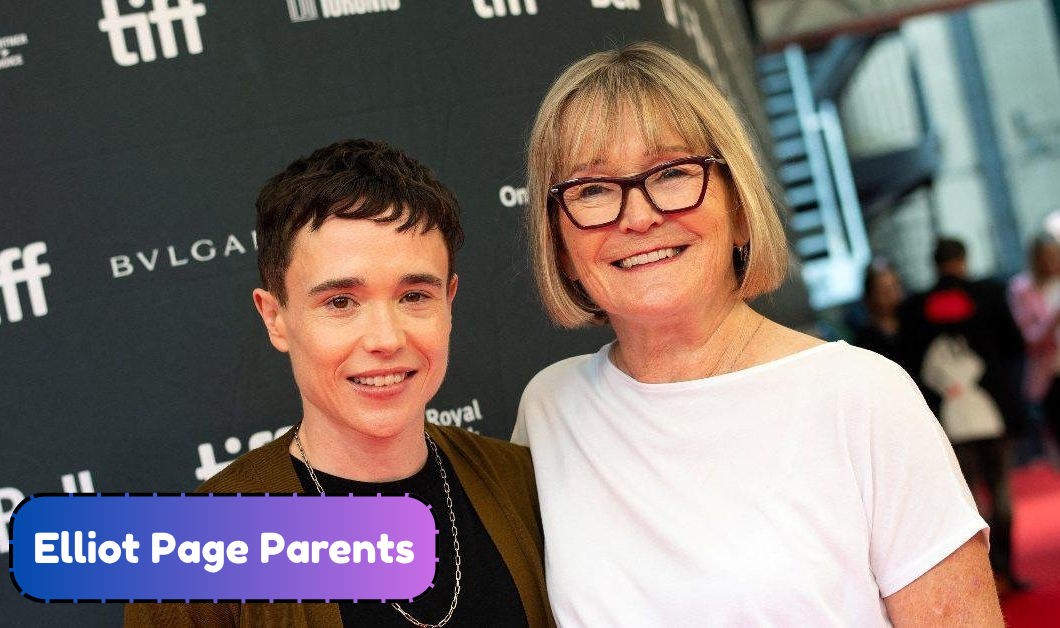
By the time Page was promoting his memoir in 2023, he publicly described their relationship as much healthier. At an event for Pageboy, he again discussed how his mother had moved from struggling with his identity to becoming a strong ally.
What Happened Between Elliot Page and His Father?
Page’s relationship with his father, Dennis Page, has followed a very different path.
In Pageboy, Page revealed that he and his father had not communicated for roughly five and a half years at the time he was writing the book. He also indicated that he could not imagine them rebuilding the relationship in the foreseeable future.
Page has generally shared fewer details about his father than his mother, but he has explained one major reason for the estrangement.
According to Page, he was deeply hurt by what he saw as his father’s support for public figures who had criticized or mocked him.
One incident involved author and commentator Jordan Peterson. After Peterson made public remarks about Page and later returned to Twitter, Page said his father “liked” one of Peterson’s posts.
For Page, the issue was not simply about a social media interaction. He described it as part of a larger pattern in which someone in his immediate family appeared to support people whose comments he viewed as personally hostile.
Page has been careful about discussing the relationship extensively in interviews, suggesting that it remains a particularly painful part of his private life.
How Page’s Childhood Influenced His Adult Life
Page has said that questions surrounding gender appeared extremely early in his childhood.
He recalled trying to express himself as a boy during private play and writing imaginary letters under a male name. At around six, he asked his mother directly whether he could be a boy.
Growing up in the 1990s, Page said he had little exposure to transgender people and did not understand what those feelings meant.
As he moved into acting, his public success increased much faster than his ability to understand himself privately.
Page became widely known through Juno, which earned him an Academy Award nomination, before taking roles in films such as Inception and the X-Men franchise. He later became a major television star as Viktor Hargreeves in The Umbrella Academy.
Behind that career, Page has described years of anxiety and discomfort.
He publicly came out as gay at a Human Rights Campaign event in 2014. Six years later, in December 2020, he announced that he was transgender and that his name was Elliot.
He later said the decision allowed him to experience a degree of comfort and clarity that had been missing for much of his life.
Why Close to You Feels Personal
Page’s family history is particularly interesting when viewed alongside the film Close to You.
Page plays Sam, a transgender man returning to his hometown after being away for several years. The trip forces him to reconnect with family members and confront complicated emotions surrounding acceptance, misunderstanding and belonging.
Although the film is fictional, its themes naturally overlap with subjects Page has discussed about his own life.
The family scenes are uncomfortable partly because they avoid presenting acceptance as simple. People can love each other while still causing pain, and apologies do not automatically erase years of difficult experiences.
That complexity closely resembles the way Page has discussed his own family.
His relationship with his mother demonstrates how someone can change and rebuild trust. His estrangement from his father shows that reconciliation does not always happen, even inside a family.
For Page, those two relationships seem to represent very different outcomes from the same larger struggle to be understood.
Where Elliot Page Stands With His Parents
Publicly available information suggests that Page remains close to his mother and continues to appreciate the changes she has made.
He has called her transformation meaningful and has spoken about her becoming supportive after years in which communication around sexuality and gender was difficult.
His relationship with his father appears much more distant.
Page said in 2023 that they had not spoken for more than five years. He has not publicly described a later reconciliation, and he has generally chosen to keep further details private.
For all of Page’s success as an actor, producer and writer, his family story remains one of the most personal parts of his journey.
It also helps explain why themes of identity, home and acceptance have such weight when he discusses them. His experiences were not limited to Hollywood or public attention. Some of the most difficult moments happened much closer to home.
The relationship with Martha Philpotts shows how understanding can grow over time. His estrangement from Dennis Page reflects the other possibility, when distance remains even after years have passed.
Together, those experiences provide a more complete picture of the person behind one of the most recognizable careers in modern Canadian acting.