
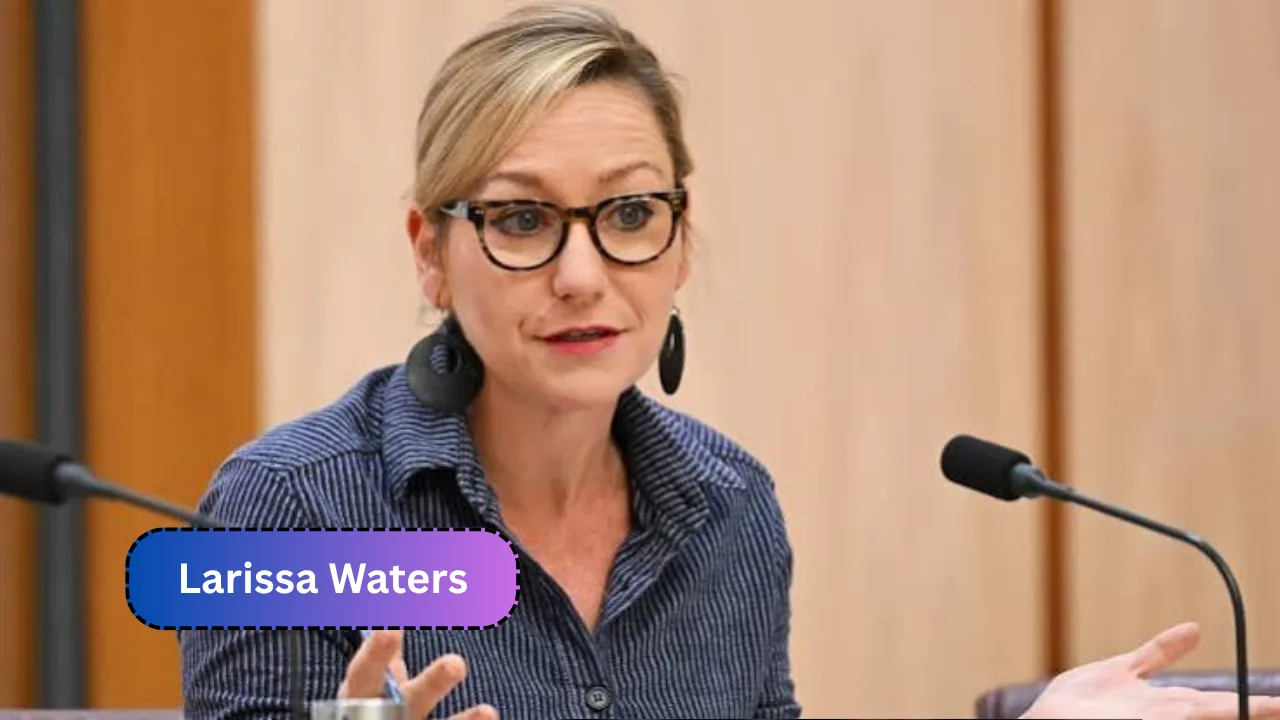
Larissa Waters Steps Down as Greens Leader Over Health
Larissa Waters has stepped down as leader of the Australian Greens after revealing that a long-standing kidney condition has worsened, abruptly ending a leadership period that began after the 2025 federal election.
The Queensland senator informed colleagues of her decision before publicly announcing that her health now requires a slower pace and a period away from political leadership. Waters said she was disappointed that illness had shortened her time at the top of the party, but believed the Greens needed a leader who could fully commit to the demands of the next election campaign.
Waters is not leaving Parliament. She intends to take medical leave, focus on treatment and recovery, and return to her Senate duties. She has also described her prospects for recovery as good, offering some reassurance after the unexpected announcement.
Her departure immediately opens another leadership contest inside a party that experienced major change only a little more than a year ago.
Why Is Larissa Waters Stepping Down?
Waters said she has been managing kidney disease for some time, but the condition recently deteriorated.
That change made continuing as federal leader increasingly difficult.
Political leadership involves constant travel, media appearances, negotiations, party meetings and long parliamentary days. Waters said she now needs to reduce the pace of her work while focusing on her health.
The announcement came as a surprise because her condition had not previously been a major part of her public political identity.
Waters described leading the Greens as a tremendous honor while making clear that she did not believe it was responsible to continue in the role while dealing with a serious health issue.
Her decision separates the leadership position from her future in Parliament.
She remains a Queensland senator and her current Senate term runs until 2031.
Waters Says Her Prognosis Is Good
One important detail in Waters’ announcement is that she intends to return.
She is taking medical leave rather than leaving politics entirely.
Waters has described the prognosis for her recovery as good, although she has not publicly provided extensive medical detail beyond confirming that she has kidney disease and that the condition has worsened.
That distinction matters.
Her departure from the Greens leadership is about the demands of the role rather than an announcement that her parliamentary career is over.
For now, the immediate focus will be treatment and recovery.
The Greens will meanwhile move quickly to choose someone else to lead the party.
Larissa Waters Became Greens Leader in 2025
Waters became federal Greens leader in May 2025 following a difficult election for the party.
Former leader Adam Bandt lost his long-held seat of Melbourne, ending his parliamentary career and leaving the leadership vacant.
The result forced the Greens to reorganize quickly.
Waters emerged as the new leader after discussions involving senior party figures including Mehreen Faruqi and Sarah Hanson-Young.
The Greens later described Waters’ selection as unanimous and uncontested.
Faruqi continued as deputy leader, while Hanson-Young took on a senior Senate role.
Waters therefore inherited leadership at a complicated moment.
The party had lost three of its four lower-house seats but retained significant strength in the Senate.
Adam Bandt’s Defeat Changed the Party
Bandt had represented Melbourne for 15 years before losing the seat in the 2025 federal election.
His defeat was one of the election’s major political surprises.
The result also removed the Greens’ sitting leader from Parliament, something that required an unusually rapid leadership transition.
Waters had already accumulated years of Senate experience by that point.
She had served as a deputy leader and represented portfolios including women, democracy and climate.
Her elevation was therefore less about introducing an unfamiliar figure and more about moving an experienced senator into the party’s most visible position.
She became the fifth federal leader of the Greens after Bob Brown, Christine Milne, Richard Di Natale and Bandt.
Her Leadership Lasted About 16 Months
Waters’ time as leader lasted from May 2025 until September 2026.
That is a relatively short period compared with several of her predecessors.
Her leadership was shaped by the unusual parliamentary position the Greens occupied after the 2025 election.
Although the party’s lower-house presence had been reduced, it remained influential in the Senate.
That gave Waters and her colleagues opportunities to negotiate with the Labor government over legislation while also trying to rebuild support outside Parliament.
Waters initially described her approach as firm but constructive.
The party continued pushing on issues including climate policy, cost-of-living measures and environmental protections.
At the same time, other senior Greens senators increasingly became prominent public voices in separate policy areas.
Mehreen Faruqi Could Be a Leadership Contender
Deputy leader Mehreen Faruqi is among the senior Greens figures whose name has emerged in discussion around the leadership transition.
Faruqi considered the leadership after Bandt’s defeat in 2025 before Waters was selected.
She ultimately remained deputy leader.
Her position places her naturally near the center of discussion now that the top job has become vacant again.
However, the Greens have not yet formally announced the result of the new leadership process.
The party room will make that decision.
Until then, any suggestion that one individual will definitely replace Waters would go beyond what has been confirmed.
Sarah Hanson-Young Is Another Senior Figure
Sarah Hanson-Young is also one of the Greens’ most experienced senators.
She was discussed as a possible leadership contender after the 2025 election and has continued holding a highly visible role within the party.
During Waters’ leadership, Hanson-Young was prominent on several national debates and remained one of the Greens’ most recognizable public figures.
She has served in the Senate since 2008, giving her extensive parliamentary experience.
Whether she contests the leadership this time will depend on the party room process and her own decision.
The Greens traditionally resolve leadership positions internally rather than through a public vote of members.
David Shoebridge Has Also Become More Prominent
Senator David Shoebridge has gained greater national visibility during the same period.
He has been active on national security, defence and civil liberties issues.
His work on AUKUS and other policy debates has regularly placed him in national political coverage.
That does not automatically make him a leadership candidate.
It does, however, underline how the Greens have increasingly relied on several senior senators to present the party’s positions publicly rather than concentrating all attention around the leader.
Waters’ departure could therefore lead to wider discussion inside the party about how responsibilities should be divided.
The Greens Have Faced Internal Disagreement
Waters’ resignation also comes during a period when the Greens have experienced some visible internal policy disagreements.
Earlier in September, several Greens senators voted differently from most of their colleagues during a debate involving carbon credits linked to the protection of public forests.
Jordon Steele-John, Nick McKim and Vanessa Bleyer sided with the Nationals on that particular amendment while other Greens senators voted differently.
Internal disagreement is not unique to the Greens, but public divisions can become more significant when a party is preparing for another leadership transition.
The next leader will inherit responsibility not only for campaigning and public communication, but also for maintaining cohesion across a Senate-heavy parliamentary team.
Polling Has Also Created Pressure
Waters’ leadership period has included questions about how the Greens are performing electorally between federal elections.
Some internal critics have argued that the party has not gained enough from periods of weakness in Labor’s primary vote.
Polling, however, can fluctuate considerably between elections and varies by company, methodology and timing.
For the Greens, the more important strategic issue is how to translate national support into lower-house seats.
The 2025 election demonstrated the difficulty of that task.
The party retained Senate influence but lost much of its lower-house representation.
That means the next leader will likely face two related challenges: maintaining the party’s Senate relevance while attempting to rebuild its presence in the House of Representatives.
Waters Has Been in Federal Politics for Years
Larissa Waters is not a newcomer to Australian politics.
She was first elected to represent Queensland in the Senate in 2010 and entered Parliament in 2011.
Her career has included environmental advocacy, women’s issues and internal party leadership responsibilities.
There was also an interruption in her Senate career in 2017 when she resigned during the parliamentary citizenship crisis because she held Canadian citizenship by descent.
She later returned to the Senate after resolving the citizenship issue.
By the time she became leader in 2025, Waters was among the Greens’ longest-serving federal parliamentarians.
That experience helped make her an obvious candidate after Bandt’s defeat.
She Led a More Senate-Focused Greens Team
One unusual part of Waters’ leadership was the structure of the party she inherited.
After the 2025 election, the Greens were overwhelmingly represented in the Senate rather than the House of Representatives.
Elizabeth Watson-Brown remained the party’s sole lower-house MP.
That changed the balance of the federal Greens.
Under Bandt, the leader had been based in the House.
Under Waters, leadership moved to the Senate.
That meant the party’s most important parliamentary negotiations increasingly happened in the chamber where it retained much greater numerical strength.
The Greens continued to hold 11 Senate seats after the election, leaving them in a position to influence legislation when the government needed additional votes.
Health Now Takes Priority
Waters’ statement made clear that the decision was driven by health rather than an immediate plan to leave political life.
She said she needs to slow down.
That is an important difference because federal party leadership can be significantly more demanding than serving as a senator without the same national responsibilities.
Leaders are expected to respond rapidly to breaking developments, travel around the country and maintain a heavy media schedule.
During an election campaign, those demands increase substantially.
Waters concluded that she could not responsibly prepare the party for the next election while also managing a worsening kidney condition.
She therefore chose to step aside before the campaign cycle became more intense.
Barbara Pocock Is Also Leaving at the Next Election
Waters’ announcement comes not long after another Greens senator revealed plans to step away.
South Australian senator Barbara Pocock announced that she would not contest the next federal election after her partner was diagnosed with brain cancer.
Pocock said family circumstances had influenced her decision.
The two announcements are separate, but together they illustrate the personal pressures that can shape parliamentary careers.
Political roles can last for years, but health and family responsibilities do not always fit neatly around election cycles.
The Next Leader Inherits a Different Greens Party
Whoever replaces Waters will take over a party very different from the one Adam Bandt led before the 2025 election.
The lower-house team is smaller.
The Senate remains central to the party’s influence.
Several senior senators have developed strong individual policy profiles.
At the same time, the Greens continue debating how to broaden their electoral appeal while maintaining their established positions on climate, housing, social policy and economic reform.
The new leader will also have relatively limited time compared with someone elected immediately after a federal election.
Waters had expected to lead the party toward the next national vote.
Her illness has brought that timetable to an unexpected end.
Larissa Waters Plans to Return to Parliament
Despite stepping away from leadership, Waters’ political career may not be finished.
Her Senate term continues until 2031, giving her several years before she would need to face another election.
Once her health permits, she intends to return to parliamentary duties.
What role she takes after returning remains unclear.
She could resume policy responsibilities without taking on the physical and political demands of national leadership.
For now, those questions are secondary.
Her immediate focus is recovery.
A Sudden Change for the Australian Greens
Larissa Waters’ decision creates another unexpected leadership transition for the Australian Greens just 16 months after the previous one.
Her rise to the leadership followed Adam Bandt’s election defeat.
Her departure comes for an entirely different reason.
Waters has said that worsening kidney disease means she cannot continue giving the position what it requires.
She has also made clear that she expects to recover and hopes to return to Parliament.
The Greens now have to choose a leader capable of guiding a Senate-heavy party through the remainder of the parliamentary term and eventually into another federal election.
For Waters, the next stage is much more personal.
After years of political campaigning and more than a decade in federal Parliament, she is stepping away from the party’s most demanding job to focus on her health.
Her leadership has ended earlier than she expected, but she has not indicated that her contribution to Australian politics is over.